The Power and Value of CT Scans in Veterinary Care
When a pet is sick or injured, getting the right answers quickly can make all the difference. A CT scan (computed tomography) is an advanced imaging tool that gives veterinarians exceptionally detailed views inside the body—often revealing problems that standard X-rays can’t fully show. CT technology helps your veterinary team diagnose more accurately, plan treatment more precisely, and, in many cases, reduce uncertainty and time to care.
What Is a CT Scan?
A CT scan uses X-rays and computer processing to create cross-sectional “slices” of the body. These slices can be viewed individually or combined to form highly detailed 3D images.
Because CT shows structures in layers, it can separate and clarify tissues that overlap on traditional radiographs (X-rays)—making it especially valuable for complex areas like the head, chest, and joints.
Read MoreReferral Form
Common Reasons a Veterinarian May Recommend a CT Scan
CT scans are widely used across veterinary medicine. Your veterinarian may recommend a CT to evaluate:
- Nasal disease (chronic sneezing, nosebleeds, discharge, suspected nasal tumors, sinus infection)
- Trauma and fractures (especially skull, spine, pelvis, and complex joint injuries)
- Intervertebral disc disease (IVDD) and spinal compression
- Ear disease (middle/inner ear infections, polyps, suspected masses)
- Chest and lung conditions (small lung lesions, metastatic screening, airway evaluation)
- Abdominal masses and organ changes that need more detail
- Orthopedic problems (elbow dysplasia, shoulder disease, surgical planning for joint issues)
- Cancer staging and treatment planning (including radiation therapy planning in some cases)
What to Expect: The CT Scan Process
Consultation with your Veterinarian and Preparation
Your veterinary team will review your pet’s medical history, current symptoms, and prior imaging. Diagnostic bloodwork (Chem/CBC) is required before anesthesia or sedation.
Sedation or Anesthesia
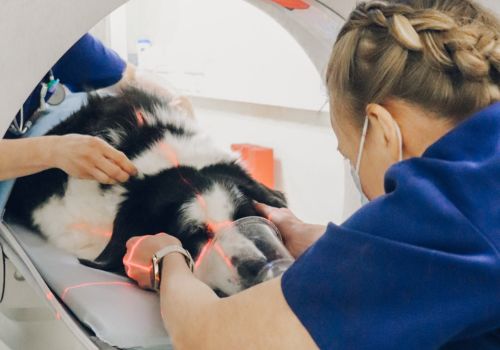
Because pets can’t be expected to hold perfectly still, CT scans usually require sedation or general anesthesia. This keeps imaging fast, safe, and accurate.
Contrast (When Needed)
Sometimes a contrast agent is given through an IV to highlight blood vessels and improve visibility of certain tissues, tumors, inflammation, or organ changes. The Imaging Veterinarian will discuss whether contrast is recommended for your pet’s specific situation.
Results and Next Steps
CT images are interpreted by a veterinarian (often with support from a board-certified radiologist). Once results are reviewed, your team will discuss diagnosis, treatment options, and any recommended follow-up.
Is a CT Scan Right for Your Pet?
If your veterinarian is recommending a CT scan, it’s typically because your pet’s condition requires a level of detail that other imaging can’t provide. If you have questions, ask your veterinary team about:
- What the CT scan is expected to reveal
- Whether contrast will be used and why
- Sedation/anesthesia plans and monitoring
- How results will change treatment recommendations
When answers matter most, CT scans can be one of the most powerful tools in modern veterinary medicine.
Request A Visit Today!